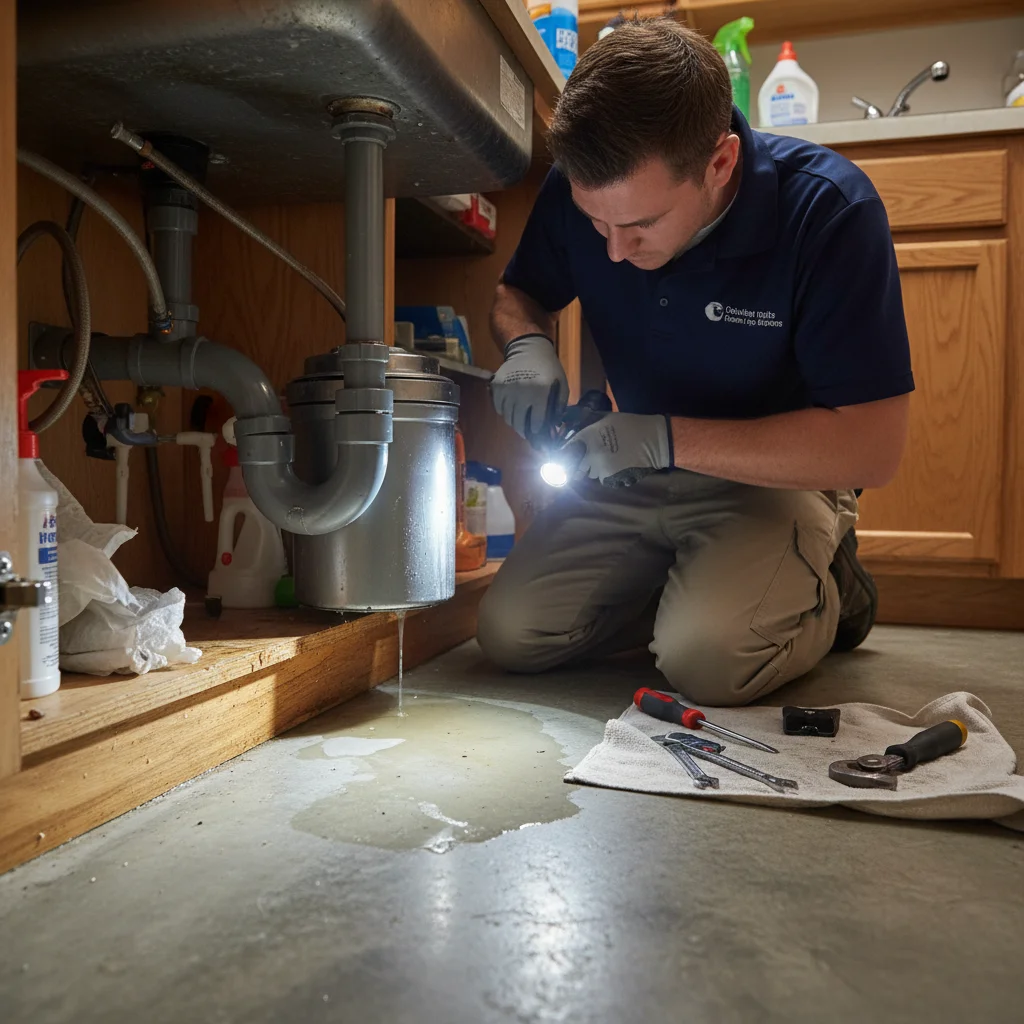
That slow drip under your kitchen sink can be easy to ignore, at least for a while. The location of the drip tells you whether you have a housing leak that usually means replacement, or a top or side fitting you can often tighten. Dry the cabinet, add food coloring to a sink of water, run the disposal, and watch with a flashlight. Top leaks (sink flange) and side leaks (drain elbow or dishwasher hose) can be fittings. A drip from the main housing, the reset button, or the base is a bottom leak.
Why a leak from the bottom usually means replacement
A garbage disposal is essentially a motor encased in a metal or plastic shell. Inside this shell, a series of seals and gaskets protect the motor from the water and food waste being ground up above. Over time, these internal seals wear out. Corrosion, constant vibration, and age cause them to fail.
When a leak appears from the bottom of the unit, especially from the reset button or small weep holes, it’s a clear sign that these internal seals have given way. Water has bypassed the grinding chamber and is now seeping through the main body of the unit, often dripping directly from the motor housing itself.
This isn’t like a loose pipe fitting that can be tightened. The unit’s main body is cracked or its internal seals are completely shot. The motor is exposed to moisture, which is both an electrical hazard and a death sentence for the appliance. Attempting to patch this kind of leak with epoxy or sealants is a temporary, unreliable, and often unsafe solution. The internal pressure and vibration will quickly compromise any external patch. Across San Diego homes, a leak from the bottom case reliably means the disposal has reached the end of its functional life. It’s time for a replacement.
Top, side, and bottom leaks, how to tell them apart
Not every garbage disposal leak is a fatal one. The location of the drip tells you everything you need to know about the cause and the solution. Before you assume the worst, you’ll need to pinpoint exactly where the water is coming from.
Start by making sure the area under the sink is completely dry. Use a paper towel to wipe down the disposal unit, the pipes, and the cabinet floor. Then, plug the sink, fill it with a few inches of water, and add a drop of food coloring to make any drips more obvious.
Now, pull the plug and turn on the disposal while you watch carefully from below with a flashlight.
Top Leaks: The Sink Flange
If you see water seeping out from where the garbage disposal meets the sink drain itself, the problem is the sink flange. This is the metal ring inside your sink. It’s sealed with plumber’s putty. Over time, this putty can degrade or the mounting bolts can loosen, breaking the seal. This is a common and fixable issue.
Side Leaks: The Drain Lines
Check the two connections on the side of the disposal. One is a larger pipe that leads to your main drain P-trap. The other is a smaller hose coming from the dishwasher air gap. If you see drips coming from either of these connection points, the problem is likely a loose fitting or a worn-out gasket. This is another fixable issue, often just requiring tightening or a new gasket.
Bottom Leaks: The Housing
If the drips are coming from the main body of the unit, the reset button, or the base where the electrical components are housed, you have a bottom leak. This indicates the internal seal failure we discussed earlier. There’s no connection to tighten or gasket to replace. This is the one that signals replacement is necessary.
What you can fix yourself (and what you can’t)
Once you’ve identified the source of your leak, you can decide whether it’s a DIY job or time to call a professional. Some leaks are straightforward fixes, while others are best left to an experienced technician.
What you can potentially fix:
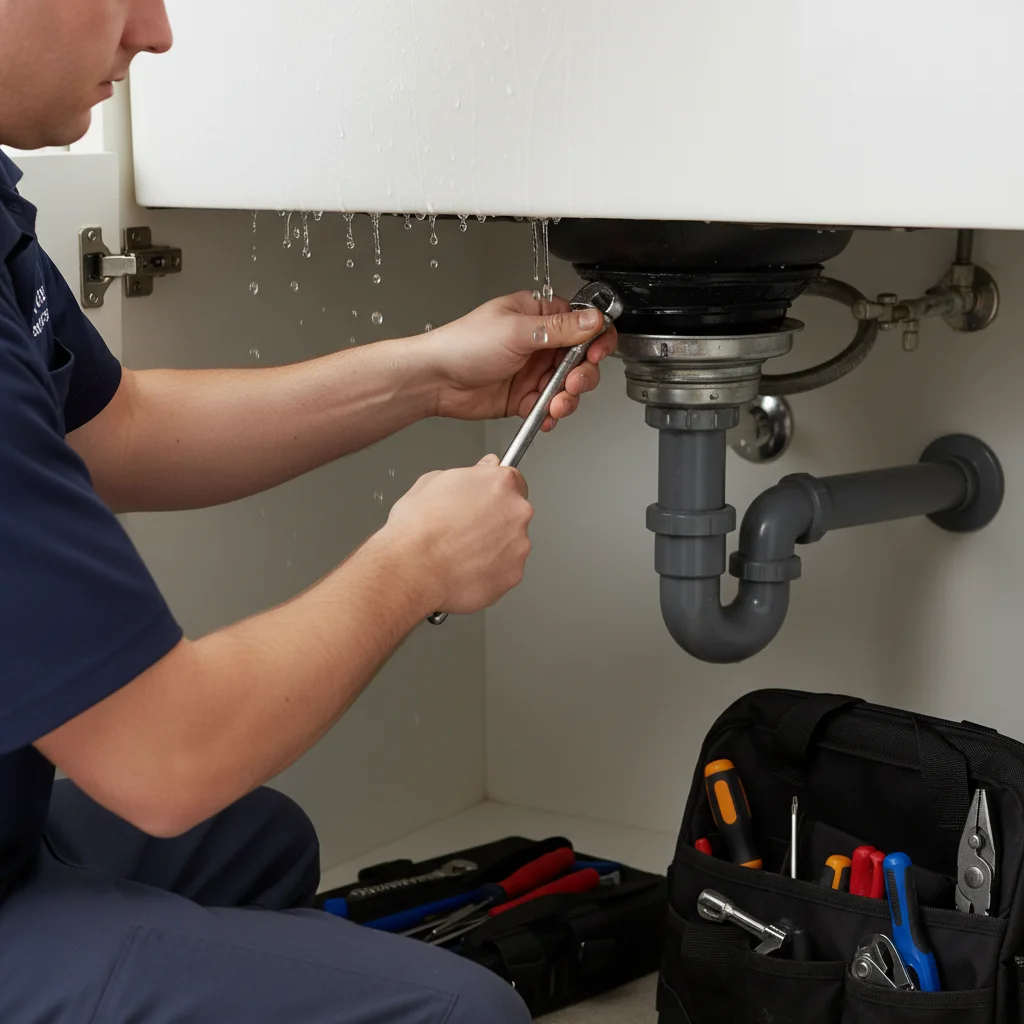
- Side Leaks (Drain Connections): Often, the leak from the main drain line or the dishwasher line can be stopped by simply tightening the connecting screws or nuts. If a connection is cross-threaded or a gasket is clearly cracked, you can buy a replacement from any hardware store. Make sure the power to the disposal is off at the breaker before you start working on it.
- Top Leaks (Sink Flange): Fixing a sink flange leak is more involved but still manageable for a handy homeowner. It requires detaching the disposal, cleaning off the old plumber’s putty from the flange and sink, applying a fresh bead of new putty, and re-installing everything. It’s a bit messy but doesn’t require specialized tools.
What you can’t fix:
- Bottom Leaks (Internal Failure): As we’ve covered, this is not a repairable problem. The unit’s housing is compromised. There are no replacement parts for the internal seals of a garbage disposal; they are built as a single, sealed unit. Any attempt to patch it from the outside is a temporary fix at best and won’t last. The only safe and permanent solution is to replace the entire disposal. Continuing to use a disposal with a bottom leak risks water damage to your cabinets and creates a potential electrical hazard.
Cost to replace vs. repair in San Diego
When your disposal is leaking from the bottom, the “repair or replace” debate is pretty one-sided. Since a bottom leak can’t be repaired, the only option is replacement. The real question becomes about the total cost of that replacement.
In San Diego County, the cost of a new garbage disposal installation involves two parts: the cost of the new unit and the cost of labor.
- New unit cost: A basic 1/3 or 1/2 horsepower model suitable for most small households costs less than a higher-power unit. More powerful 3/4 or 1 HP models with stainless steel components and quieter operation cost more, since the motor and grinding chamber materials both add expense.
- Labor cost: Professional installation by an appliance technician adds to the total. This includes removing the old unit, properly installing the new one, connecting all plumbing and electrical, testing for leaks, and disposing of the old appliance.
So, the total replacement cost depends heavily on the model and horsepower you choose, plus installation labor. While a DIY installation can save on labor, it requires confidence in both plumbing and electrical work. An incorrect installation can lead to leaks, clogs, or electrical shorts. For most people, hiring a pro ensures the job is done right and safely, and the technician should quote the job in writing before work begins. This topic is covered in more detail in our general guide on whether to repair or replace an appliance.
How long a disposal should actually last
If you’re facing a replacement, you might be wondering if your old unit failed prematurely. How long a disposal lasts depends on build quality, how you use it, and water conditions. Mineral-heavy water can speed corrosion on galvanized grinding parts. Stainless steel chambers resist that wear better.
A budget unit with galvanized grinders typically fails sooner than a mid-range or high-end unit with stainless steel internals. Treat those as typical patterns, not measured year counts.
To maximize the life of your next disposal, follow these simple rules:
- Always run cold water before, during, and for 30 seconds after grinding.
- Avoid putting fibrous materials (celery, corn husks), grease, coffee grounds, or large bones down the drain.
- Occasionally grind up some ice cubes and citrus peels to clean and sharpen the impellers.
Picking a replacement that won’t fail in three years
Choosing the right replacement disposal can save you from having this same problem again in the near future. Don’t just grab the cheapest one on the shelf. Consider these factors to make a smart investment.
Horsepower (HP)
- 1/3 to 1/2 HP: Best for small households, singles, or couples who don’t cook frequently. They can handle soft food scraps but may struggle with tougher items.
- 3/4 HP: A great all-around choice for a family of four. It offers a good balance of power and price, easily handling most everyday food waste.
- 1 HP: Ideal for large families, avid home cooks, or those with a septic system. These models can grind almost anything and are less likely to jam.
Build Materials
This is the most critical factor for longevity. Look for a unit with stainless steel grinding components and a stainless steel grind chamber. Galvanized steel parts are common in cheaper models, but they will eventually rust and fail, especially with San Diego’s water. Stainless steel resists corrosion and will significantly outlast its galvanized counterparts.
Motor Type
Most disposals use permanent magnet motors, which are fast and effective. Some higher-end models use induction motors, which are generally quieter and more durable, but also more expensive.
When you’re ready to upgrade, the technicians in our network can help. They provide professional garbage disposal repair and installation services throughout San Diego County, and can recommend a model that fits your budget and needs. When hiring an appliance repair company, always confirm they’re registered with the California Bureau of Household Goods and Services (BHGS).
Frequently asked questions
Can a garbage disposal leaking from the bottom be repaired?
No. A bottom leak means the internal seals have failed or the housing body is cracked, and there are no replacement parts for the sealed interior of a disposal unit. Patching with epoxy won’t hold because vibration breaks any external seal quickly, and the motor is now exposed to moisture, which is an electrical hazard.
How do I know if my disposal is leaking from the bottom vs. a connection?
Dry the entire area under the sink, add food coloring to a sink full of water, then run the disposal and watch with a flashlight. Top leaks (sink flange) and side leaks (drain elbow, dishwasher hose) are fixable. A drip from the main housing body, the reset button, or the base itself is a bottom leak and means the unit needs replacing.
What does a garbage disposal replacement cost in San Diego?
The total depends heavily on the model you choose. Horsepower and materials both move the price of the new unit, and stainless steel components cost more than galvanized ones. Professional installation labor adds to that, covering removal of the old unit, connecting plumbing and electrical, testing for leaks, and haul-away. Ask the technician for a written quote before work begins.
How long should a replacement disposal last?
Lifespan depends on materials, use, and water quality. Budget units with galvanized grinders typically wear sooner. Mid-range and high-end models with stainless steel grinding chambers typically last longer. Mineral-heavy water shortens life on galvanized parts, so stainless internals are worth considering here. This page does not publish a year range for disposals.
When to call us
If you’ve diagnosed a leak coming from the bottom of your garbage disposal, the next step is a replacement. While it’s a project some homeowners tackle themselves, it involves both plumbing and electrical work under the sink. For a safe, leak-free installation, it’s best to call a professional.
Call us at (858) 988-7787 and we’ll get you matched with a technician.