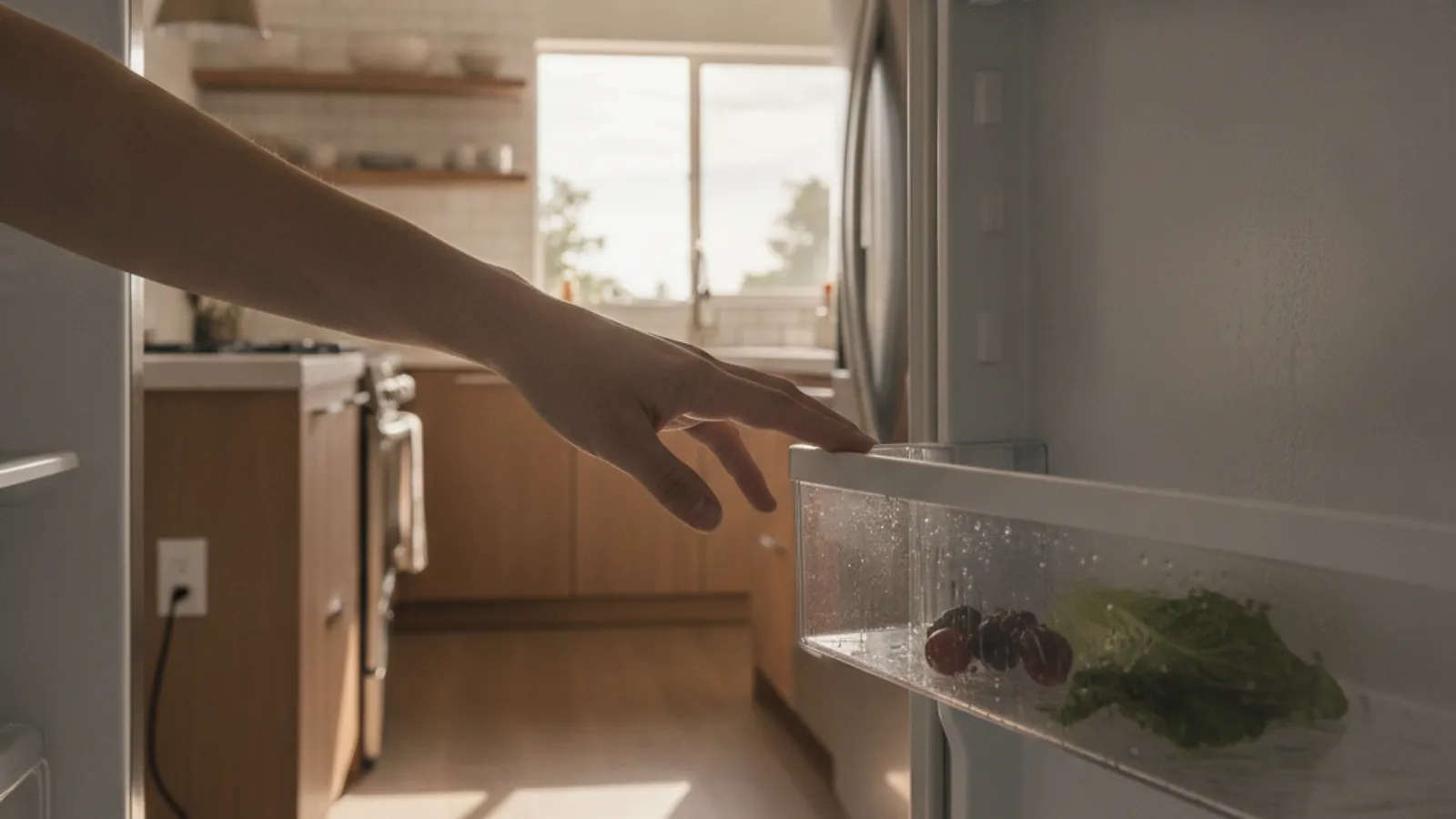
A Frigidaire refrigerator that is not cooling needs a recorded pattern: freezer still cold, or both compartments warm. That split helps the technician. It does not name the failed part.
FDA food-safety guidance holds the refrigerator at or below 40°F and the freezer at or below 0°F. Perishables above 40°F should be discarded after 2 hours (1 hour if ambient is above 90°F). Those are holding figures, not a recovery clock for a repair.
Fridge warm but freezer cold
A warm fridge with a cold freezer can involve blocked airflow or a defrost path that is not clearing ice. Do not pull the freezer rear panel. Do not use a hair dryer on the coil. If the model manual allows it, unplug, inspect the visible gasket, and clean accessible condenser coils. Record which compartment is warm and leave heater, relay, and sealed-system tests to the technician.
Both fridge and freezer warm
When nothing is cold, the sealed system, start components, fans, or the control can be involved. Start-relay and board failures are not known Frigidaire facts you can confirm from the kitchen. A garage install in inland heat can load dirty coils. That is context, not a cause. Refrigerant and compressor work stay with an EPA Section 608 certified technician.
Diagnosis order and what you can do yourself
First, confirm the symptom pattern: freezer cold or both warm. Second, if the manual allows it, unplug and vacuum accessible condenser coils and inspect door seals. Those are external checks. Do not pull panels or test a start relay.
Reset steps belong in the model manual. There is no universal five-minute unplug or 37°F recovery window for every Frigidaire. The FDA 40°F / 0°F figures are holding targets, not a repair-success clock. When it’s time for hands-on help, our refrigerator repair service matches independent technicians. Cost factors are in refrigerator repair cost in San Diego.
Frequently asked questions
Why is my Frigidaire refrigerator not cooling?
Record whether the freezer is still cold. Frosted evaporator, fan, start relay, and sealed-system faults are technician diagnoses, not a ranked cause list.
How do I reset a Frigidaire refrigerator?
Use the reset in the owner’s manual for that exact model. Unplugging may be allowed. Button combinations are not shared across Frigidaire generations. A reset that does not last is a reason to request diagnosis, not proof of a named part.
How long does it take a Frigidaire to cool after a fix?
Follow the recovery time in the model manual. FDA guidance is at or below 40°F in the fridge and 0°F in the freezer as holding limits, not a 37°F success target after a reset.
When to call us
If the simple checks don’t bring the cold back, the next step needs tools and a trained eye. Call us at (858) 988-7787 and we’ll match you with a technician.