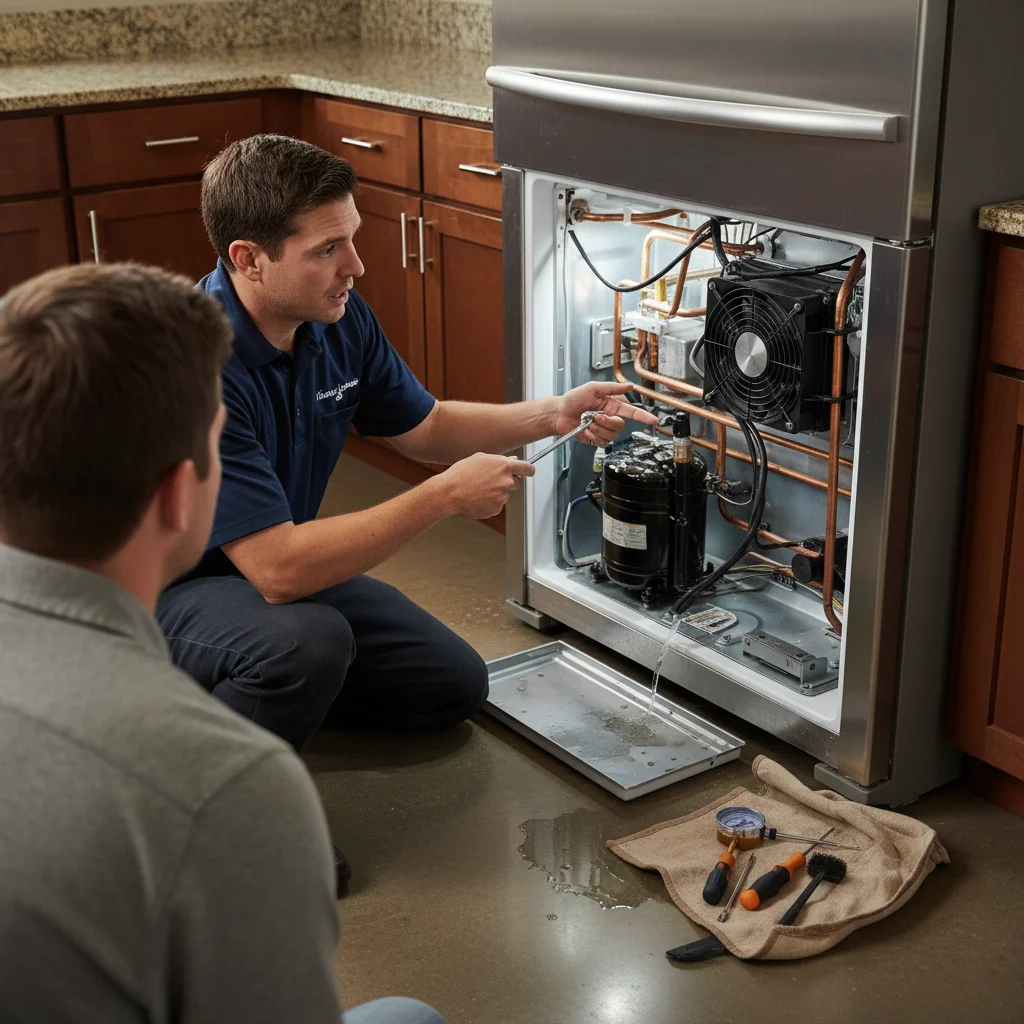
You open the fridge for a snack and get a blast of room-temperature air. The milk is warm, the light is on, but the familiar hum is gone. A technician takes a look and delivers the bad news: it’s the compressor. National cost guides such as HomeGuide put a full compressor job in a high range relative to many other appliance parts. Compare that attributed range with a written diagnosis.
Repair Pro San Diego is a referral service. We do not set a quote. National cost guides such as HomeGuide put full refrigerator compressor replacement in a published range. The independent technician diagnoses first and quotes in writing. Sometimes that quote is a reason not to repair. Let’s break down what actually drives the bill so you can decide with numbers that belong to the provider, not to this brand.
What a refrigerator compressor does (and why it fails)
Think of the compressor as the heart of your refrigerator’s cooling system. It’s a powerful pump that circulates refrigerant, the lifeblood that carries heat out of the fridge. The compressor pressurizes the refrigerant gas, which heats it up. As this hot, high-pressure gas moves through the coils on the back or bottom of your fridge, it releases its heat into your kitchen. It then condenses into a liquid, flows through an expansion valve, and becomes a very cold, low-pressure gas inside the freezer. This cold gas absorbs the heat from your food, and the cycle starts all over again.
This is a demanding job. The compressor runs on and off, thousands of times a year. Failures usually fall into two categories:
- Electrical Failure: The motor windings inside the compressor can short out or burn out. You might hear a “click-buzz” as the start relay tries and fails to turn the motor on.
- Mechanical Failure: Internal components like pistons or valves can seize up or break from wear and tear. This often results in a loud clanking or grinding noise, or sometimes, complete silence.
Overheating can shorten compressor life. It is not ranked as the most common premature-failure cause here. If the condenser coils are caked with dust and pet hair, the compressor has to work much harder to release heat, causing it to run hot and wear out faster.
The average cost of compressor replacement in San Diego County
National cost guides such as HomeGuide put full refrigerator compressor replacement at $700 to $1,250 on average. For high-end, built-in models like Sub-Zero or Thermador, expect that figure to run well above the average.
Why such a wide range? Several factors influence the final price:
- Brand and Model: A standard compressor for a GE or Whirlpool top-freezer is much less expensive than one for a high-efficiency LG with a linear inverter compressor or a large-capacity Sub-Zero.
- Warranty: If the compressor itself is still under the manufacturer’s sealed-system warranty, you might only have to pay for labor. Warranty length is model-specific. Check the owner’s manual, not a typical 5- or 10-year figure from this page.
- Accessibility: A compressor on a standard, freestanding fridge is easier to access than one on a built-in unit that needs to be carefully pulled out of custom cabinetry.
- Refrigerant Type: The cost of the refrigerant itself can vary. Older models might use refrigerants that are more expensive or harder to source.
This is not a minor fix. The fridge compressor cost reflects a complex procedure involving expensive parts and highly skilled labor, which is why it’s so important to understand the full picture before you commit. The matched technician diagnoses first and quotes in writing before any work begins.
Parts vs. labor: what drives the bill
It’s easy to look at a repair bill and assume the part alone explains it. While the compressor isn’t cheap, labor is a real share of the final cost. This is a job that requires specialized tools, EPA certification, and several hours of a technician’s time.
Here’s what’s involved:
- The Part: A compressor’s cost varies by brand and capacity. A standard model runs less than a high-efficiency inverter compressor or a large-capacity built-in unit. Whether the part is OEM is a provider and model question, not a Repair Pro rule.
- The Labor: This is where the real work happens. A technician can’t just unplug the old one and plug in the new one. The process can involve:
- Refrigerant Recovery: The technician must use an EPA-approved machine to safely and legally recover the old refrigerant from the sealed system.
- Removal: The old compressor is un-brazed and removed from the copper lines.
- Installation: The new compressor is brazed into place. The filter drier, which removes moisture, is also replaced.
- Vacuum: The system is connected to a vacuum pump to remove air and moisture, which would damage the new compressor. How long that takes is model- and provider-specific.
- Recharging: The factory-specified amount of new refrigerant is weighed and charged back into the system.
How long that sequence takes, which refrigerant is used, and whether repair or replacement wins are provider- and model-specific. Ask for those details on the written quote. In San Diego County, skilled appliance technician labor is a real share of the total bill, on top of the part itself.
Repair versus replace is a quote, not a 50% rule
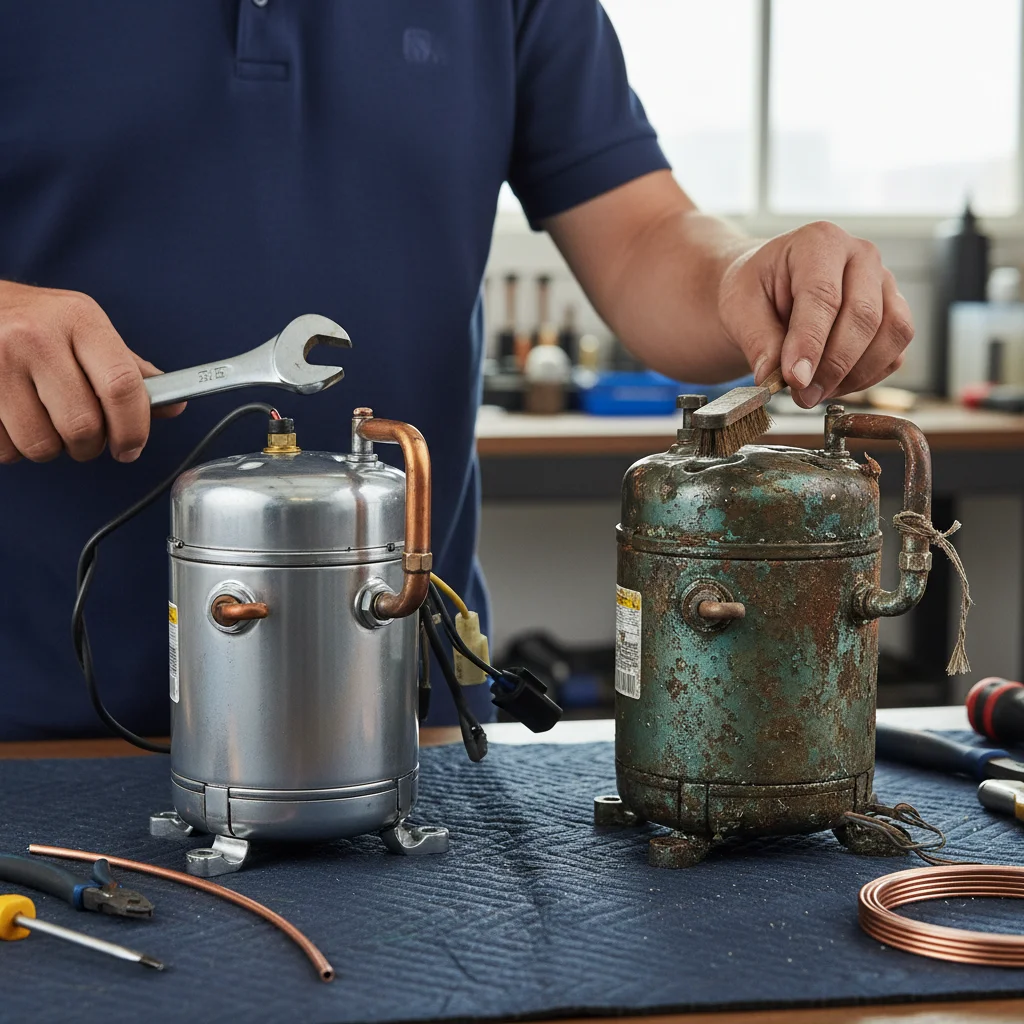
When faced with a high repair bill, there is no 50% rule on this site. Compare the written compressor quote to a comparable new refrigerator, the rest of the appliance’s condition, and parts availability. The compressor is one major component. The ice maker, control board, defrost system, and fan motors are the same age. That is a reason to ask the technician for an honest read, not a percentage cutoff.
Putting money toward a new refrigerator instead can make sense when the quote and the rest of the unit say so. Our guide on deciding whether to repair or replace your appliance can help you weigh the factors.
How to know for sure it’s the compressor
A warm fridge doesn’t automatically mean a dead compressor. Many less expensive parts can cause cooling issues, and it’s frustrating to pay for a service call only to find out it was a simple fix. Before you assume the worst, it’s a good idea to run through some basic checks.
Many cooling problems stem from dirty condenser coils, a failed evaporator fan, or a faulty thermostat. We’ve put together a simple guide to help you identify these common culprits. Before calling for service, take a few minutes to read our fridge not cooling checklist to rule out easier fixes.
However, some symptoms strongly point to a compressor or its related components:
- Clicking, then silence: You hear a distinct “click” from the back of the fridge, possibly followed by a brief buzz, and then nothing. This repeats every few minutes. This is often the sound of the start relay attempting to engage a seized or failed compressor.
- Constant humming or buzzing: The compressor is running, but the fridge isn’t getting cold. This could mean the compressor is running but has lost its ability to pump effectively.
- The compressor is very hot: The compressor housing will be warm to the touch during normal operation, but if it’s too hot to keep your hand on, it’s likely overheating and shutting down on its thermal overload protector.
The only way to know for sure is with a professional diagnosis. A technician can use a multimeter to test the compressor’s electrical windings and an amp clamp to see if it’s drawing the correct amount of power.
Getting an honest quote before you decide
When you’re facing a potential four-figure repair, you need a clear, honest, and comprehensive quote to make an informed decision. A trustworthy repair company won’t just give you a price over the phone; they’ll need to diagnose the problem in person.
An honest quote for a refrigerator compressor replacement in San Diego should clearly itemize the costs: the price of the compressor and filter drier, the estimated labor charge, the cost of the refrigerant, and any associated service or diagnostic fees.
Repair Pro San Diego matches you with an independent technician. That person diagnoses the exact cause and provides a firm, upfront quote. Ask whether repair makes financial sense based on the age and condition of your refrigerator. Sometimes the best advice is to shop for a new one. Our goal is information you need for any refrigerator repair in San Diego. The brand does not perform the sealed-system work.
Frequently asked questions
How much does it cost to replace a refrigerator compressor in San Diego?
National cost guides such as HomeGuide put full compressor replacement at $700 to $1,250 on average. High-end built-ins like Sub-Zero or Thermador run well above that average. The final number splits between the compressor part itself, which varies by brand, and labor for refrigerant recovery, brazing, vacuum, and recharge.
Is it worth replacing a compressor on an older refrigerator?
Apply no percentage cutoff. If the repair is large next to a comparable new unit, replacement can win. An older French door fridge where the compressor quote is high is a close call, and the rest of the appliance is the same age, so another major failure is possible. Ask the technician to put that in writing.
What does a failing compressor sound like?
A classic symptom is a click from the back of the fridge, a brief buzz, then silence, repeating every few minutes. That’s the start relay trying and failing to turn the motor over. A compressor that runs but won’t cool may hum constantly while the food stays warm.
Can I diagnose a compressor failure myself?
You can rule out cheaper causes first: dirty condenser coils, a failed evaporator fan, or a bad thermostat all cause warm-fridge symptoms and cost far less to fix. Confirming a compressor failure requires a multimeter test of the electrical windings and an amp clamp to check power draw, which needs a professional.
When to call us
Compressor replacement is a complex job that involves handling restricted refrigerants and requires specialized tools like brazing torches and vacuum pumps. This is not a DIY project. For a professional diagnosis and a clear, honest quote, leave it to the pros.
Call us at (858) 988-7787 and we’ll match you with a technician.